
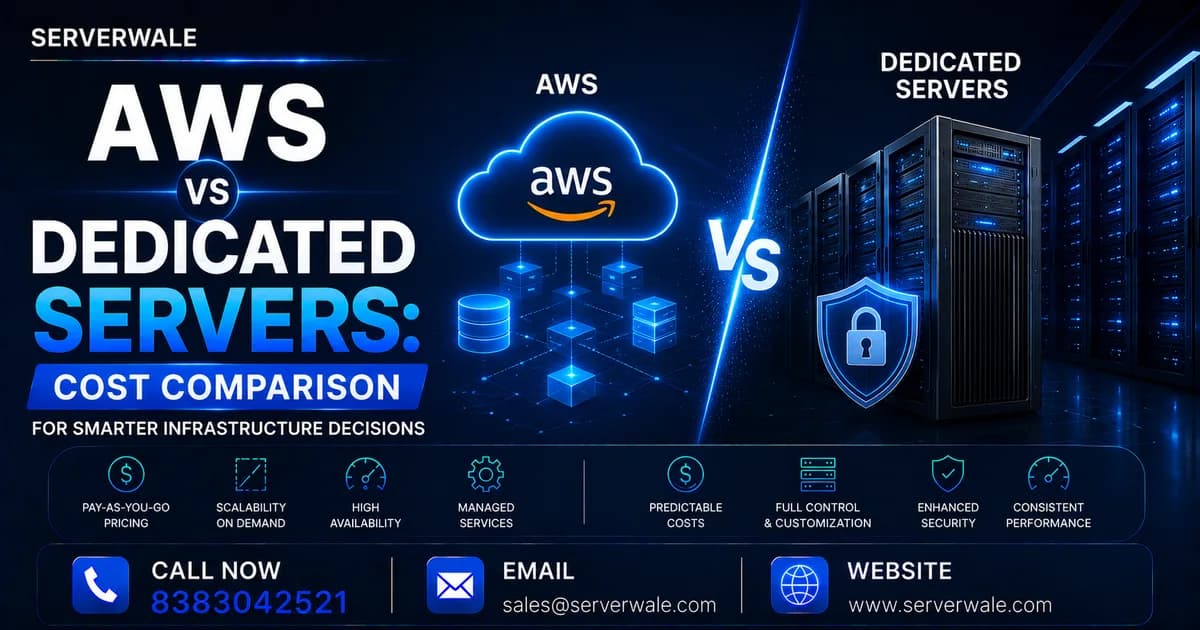
Discover the real cost differences between AWS and dedicated servers to choose the most efficient and scalable hosting solution.
AWS vs Dedicated Servers: Cost Comparison
When businesses evaluate hosting solutions, cost is often the deciding factor. Two of the most common choices—AWS cloud infrastructure and dedicated servers—offer very different pricing models. While both have their advantages, understanding how their costs work in real-world scenarios is essential for making the right decision.
AWS Pricing: Flexible but Complex
AWS operates on a pay-as-you-go model, which means you only pay for the resources you use. This includes compute power, storage, bandwidth, and additional services like monitoring or backups. On the surface, this flexibility is appealing—especially for startups or applications with unpredictable traffic.
However, AWS pricing can become complex over time. Costs may rise due to data transfer fees, scaling during peak usage, or adding new services. Without careful monitoring, monthly bills can exceed expectations. While AWS provides tools for cost management, it still requires active oversight to avoid unnecessary expenses.
Dedicated Servers: Fixed and Predictable
Dedicated servers follow a more traditional pricing structure. You pay a fixed monthly or annual fee for exclusive access to a physical server. This often includes a set amount of bandwidth, storage, and support services.
The biggest advantage here is predictability. Businesses can plan their budgets without worrying about fluctuating costs. For workloads that are stable and resource-intensive, dedicated servers can be more cost-effective in the long run.
Some providers, such as ServerWale, offer customizable dedicated server solutions that align with specific performance and budget needs. This makes them a practical option for companies seeking consistent performance without variable billing.
Comparing Costs Based on Use Case
- Dynamic workloads: AWS is ideal when demand fluctuates. You can scale resources up or down instantly, paying only for active usage.
- Consistent workloads: Dedicated servers are more economical for steady traffic and long-term projects.
- Data-heavy operations: Dedicated servers often provide better value since AWS charges separately for data transfer.
- Long-term investment: Over time, dedicated servers can be more cost-efficient compared to ongoing cloud usage fees.
Hidden Costs and Considerations
Beyond basic pricing, there are indirect costs to consider. AWS reduces the need for physical hardware management, saving time and operational effort. However, dedicated servers provide full control over configurations, which can improve performance and security.
Additionally, while AWS offers advanced features, many come at an extra cost. Dedicated servers, on the other hand, typically include core resources in a single package, making expenses easier to manage.
Conclusion
Both AWS and dedicated servers have their place in modern IT infrastructure. AWS excels in flexibility and scalability, making it suitable for rapidly changing environments. Dedicated servers stand out for their cost stability and long-term value.
The right choice depends on your workload, growth plans, and budget strategy. By carefully analyzing your usage patterns and total cost of ownership, you can select a solution that delivers both performance and financial efficiency.